

What Procrastination Actually Is

I place a piece of charcoal on the desk, spread out the paper, sit down in the chair.
That should be all it takes. But my hand doesn’t go straight there.
Before sitting down, I prepare another cup of coffee.
Before spreading the paper, for some reason I open my phone.
Before picking up the charcoal, I rearrange the small things on the desk.
It looks like preparation for starting. But really, I’m just postponing the start by a little.
Once I begin, I know I can carry it through on momentum. The version of me that’s already moving settles into focus surprisingly easily. Sometimes I even feel I don’t want to stop.
And yet the version of me before starting is strangely heavy.
This isn’t only about drawing. The same thing happens before writing an essay, before beginning work.
After I eat.
After I read this page.
After I reply to this email.
After I finish the dishes.
I keep lining up small errands before the real task.
Each one looks like it will take five or ten minutes. So it feels like it would be cleaner to finish them first and then begin. But in reality, those “quick things” never end as quickly as I expect. One finishes, and the next one appears. Before I know it, evening has come.
On days like this, I used to wonder.
What is it that I’m tired from today?
A tiredness with a clear cause is easier to handle. If I walked too much, I rest. If I thought too much, I sleep. If I saw too many people, I take time alone.
But when you’re tired without having done anything, you start to blame yourself. Maybe I’m lazy. Maybe I can’t concentrate. Maybe I just don’t have enough drive.
The feeling of procrastinating is very similar. You know what you have to do. But you can’t move. Time passes while you can’t move. And though nothing has progressed, you’re undeniably tired.
From the outside, it can look like laziness.
But recently I’ve come to think it might be something else.
What we call procrastination might not be a lack of motivation. It might be the state of having too many unfinished things still living in the mind.
An email you meant to reply to, still sitting there. A page you opened to read later, still open. A service you signed up for and barely use. Studying you’ve been meaning to do. The cardboard box in the corner of the room you’ve been pretending not to see for weeks.
They are silent. They don’t shout at you to hurry. They don’t accuse you of failing to do them now.
But every time they enter your field of vision, something in your head reacts, a little. Ah, I still haven’t done that. That’s still there. I have to take care of this. The reaction is small. But it happens many times a day. It’s like being pricked, over and over, by a small needle.
In psychology, there’s a term called the Zeigarnik effect. People remember interrupted or unfinished tasks more easily than completed ones. Put simply, what isn’t finished keeps occupying the mind.
It’s true that finished things are quiet. An email I’ve replied to no longer rings in my head. A bill I’ve paid becomes just a piece of paper. A desk I’ve cleared returns to being just a desk.
But unfinished things are different. They are objects, and at the same time, they take the shape of “something I should do.”
The paper bag on the floor is not just a paper bag, but a signal that says “I need to sort through what’s inside.”
The tab I left open is not just a page, but a voice saying “I have to read this later.”
The subscription I’m not using is not just a contract, but a small guilt that says “I might be losing money.”
So even when our hands are still, our minds are touching these unfinished things many times. Once when we first decide to do them, again when we postpone them, and again the moment they enter our sight. The body isn’t moving, but the mind keeps returning to that place.
That’s why it’s tiring.
Because I draw, I often think about the white space on paper. What to leave unfinished matters as much as what to render. If you draw everything in, the picture becomes airless. There’s no room left for the viewer to enter, no room for air to move through.
Life is probably similar. Even when you haven’t packed your schedule, even when you’ve done nothing physically, if there are too many unfinished things in your head, the white space in your mind gets eaten away. And when that space is gone, you can’t move.
I don’t think this is weakness of will. You’re tired before you even begin.
“Clean up.” “Reply.” “Study.” These words look simple. But they’re actually very vague. Where do you start? Where does it end? How long will it take? What counts as finished? When these things aren’t visible, the brain treats the task as larger than it is.
If I think “clean the room,” it feels heavy. But “throw away three pieces of paper on the desk” feels possible. “Study” feels heavy. But “open the book and read one page” still feels doable.
Procrastination isn’t only caused by having too much to do. It’s caused by tasks whose edges are blurred. Things with no visible end become heavy. When something is heavy, you can’t start it. When you can’t start, it stays unfinished. And inside that loop, you start to blame yourself more and more.
But really, before blaming yourself, I think you need to make the shape of the task smaller.
I used to believe that adding more things I wanted to do was the same as expanding my own possibility. Books I wanted to read, things I wanted to learn, more places to post, more works I wanted to make, more “someday” entries on the list. It looks like a positive way to live.
Touching new things does matter. Starting something can change the scenery of your life. But if you keep adding without ever closing what you’ve added, that openness can quietly turn into weight.
“I might do it someday.”
This phrase sounds gentle. It seems to keep possibility alive, to invest in a future self. But when “someday” stretches on too long, it quietly presses against the present self. The course you’ll watch someday, the book you’ll read someday, the folder you’ll organize someday, they look like they’re being kept for the future, but in fact they’re slowly consuming the focus you have now.
So sometimes, I think it’s necessary to cleanly stop. Continuing isn’t the only form of sincerity. Stopping is also a kind of organizing.
Cancel a service you no longer use. Take down a book you won’t read. Reply to the message you need to reply to. If you’re not going to reply, decide not to. Cross off things you have no intention of doing. This isn’t giving up. It’s returning some white space to the present self.
Sometimes, to begin something, you first have to finish something else. Before adding new effort, reduce what’s been left behind. If you get this order wrong, no matter how positive the new thing is, you’ll find yourself struggling partway through.
Rather than trying to find motivation, first become lighter. I think this way of thinking is much more realistic.
Cleaning the room carries the same meaning. Tidying sounds like a habit for people who are naturally neat. But the things in a room aren’t just background. What enters your field of vision affects your mind, more than you’d think. Laundry left on the floor, half-read documents, empty boxes, tools you don’t use, shelves you mean to organize someday, all of them become small marks of the unfinished.
Of course, a slightly messy room doesn’t ruin you as a person. Things accumulate when you live. The goal isn’t to maintain a perfect space. But when too many things in your sight say “I have to deal with this,” it’s hard for the mind to rest.
Tidying isn’t only about making the room beautiful. It’s about reducing the signals that enter your brain. Erasing the unnecessary signs of unfinished things. Recovering the white space you need in order to start moving. Seen this way, tidying isn’t a spiritual idea. It’s a very concrete way of arranging an environment.
We don’t move on willpower alone. We’re influenced by what we see, pulled by what’s placed near us, affected by the air of the people around us. So when you want to change something about yourself, I think it’s better not to rely only on grit.
Find motivation. Push through. Talk yourself into it. Sometimes those words are needed. But to lean on them every day is exhausting. Motivation changes like the weather. It can appear suddenly, and it can vanish for no reason. If you entrust your daily actions to something that unstable, you’ll find yourself blaming yourself every time it doesn’t show up.
So lately I’ve come to think that, rather than “finding motivation,” it matters more to “create a state where you can move even without motivation.”
Before I started drawing, my phone had several games on it. I’d clear a stage in spare moments. Finish one, move to the next. Continue until I forgot how to stop, then delete the data when I got bored, left with nothing in my head. Time really did pass that way.
After I started drawing, I deleted those apps. As long as something I wanted to “just finish first” was visible, I couldn’t move. So I put it out of sight. Instead of resisting with willpower, I made it so I didn’t need to resist.
That’s not a dramatic change. It’s not the kind of thing that turns a life around in a day. But when you remove the small snags in your mind, one by one, you become a little freer to move.
I used to think that to start something, I needed to become stronger. But maybe, before becoming stronger, you need to become lighter. Set down what you’ve been carrying too long. Close what hasn’t been closed. Decide what not to do. Move what you don’t need to see out of your field of vision. Make space inside the mind.
Once there’s space, people often start moving on their own. You don’t have to force yourself. Your hand reaches out. The room to think comes back. The next step becomes a little more visible.
To “fix your procrastination” sounds like a project of strict self-management. But I don’t think that alone lasts. What’s really needed isn’t to push yourself harder, but to quietly notice why you can’t move.
When you’re tired without having done anything. When you can’t move, even though you know you should. When even small things feel heavy. Behind all of that, there might be something unfinished still sitting there.
It might be a big dream. It might be a message you haven’t returned. It might be a room you haven’t tidied, or a habit you no longer want to keep. It might be something you actually want to let go of, but keep holding.
You don’t have to finish everything at once. Just one, first.
Reply to one.
Throw out one.
Cancel one.
Close one.
Decide, about one, “I’m not going to do this.”
Even that closes one tab that had been left open in your head. Even one. When it closes, things become a little quieter. And in that quietness, you can finally start thinking about what comes next.
What we call procrastination, I don’t think it’s a weakness of will. It’s that there are too many unfinished things, and the white space in the mind has been taken away. So before you blame the self that can’t move, try finishing just one.
To begin something, close something.
I think it’s from that small act that your own time starts to come back.
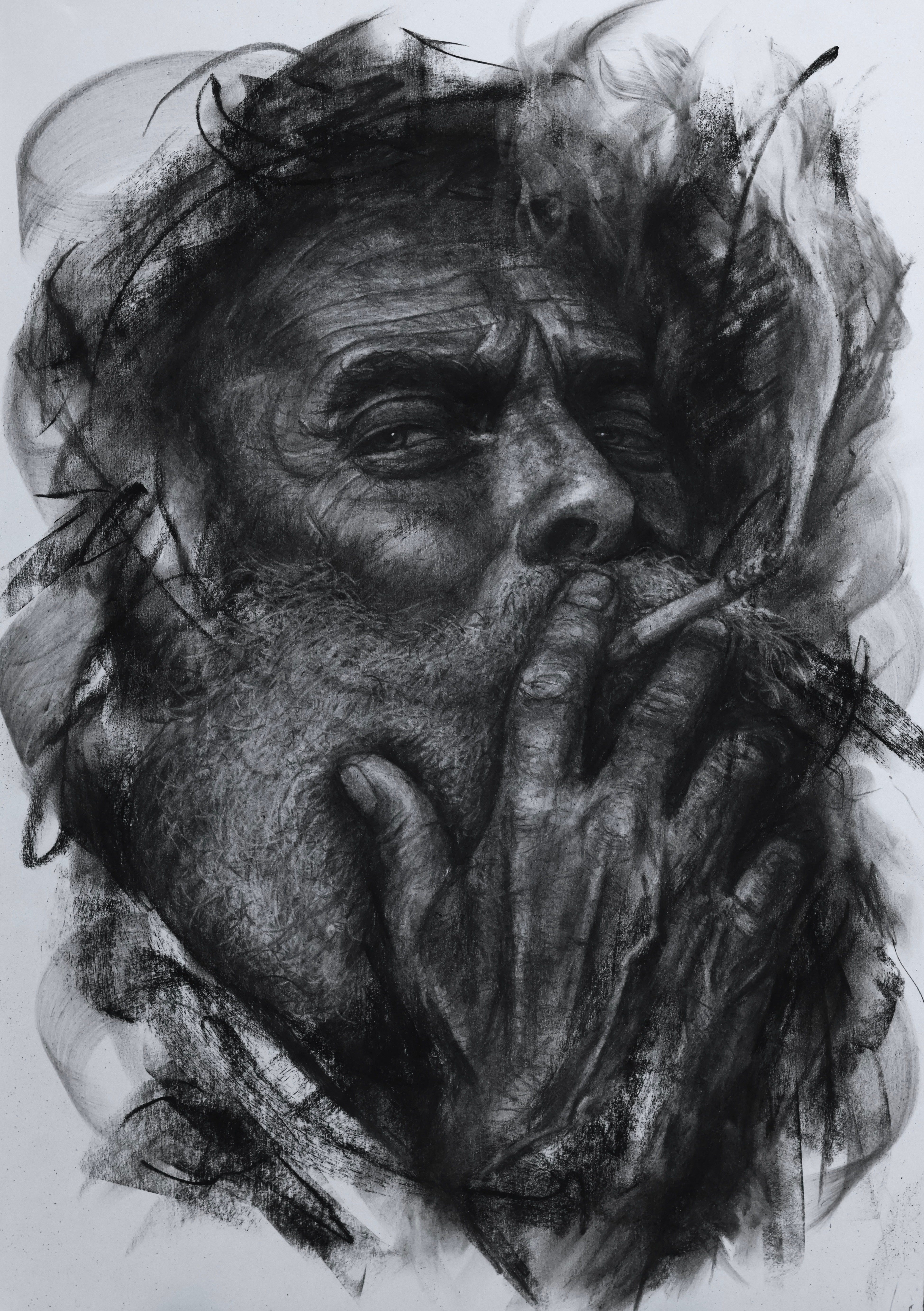
I want these drawings and words to travel openly, and to reach the people who may need them.
If something here resonates with you, a paid subscription helps me continue making work, writing honestly, and keeping this space alive.
Thank you for reading.
That really touched me and I cried. Well said
Great breakdown! 'Brain freeze' - that's always been my own name for it, or sometimes 'brain paralysis'. When it hits hard, turning to the fluff, to stuff that frozen rigid brain with anything else bar the task at hand, becomes involuntary.